Guests often ask me about argan oil, usually at breakfast, when a small bowl of golden oil appears next to the bread. They want to know if it is the same thing as the bottle in their bathroom at home. It comes from the same tree, but it is not always the same oil. And behind every drop there is a lot of patient work, mostly done by women. So here is what I tell people: where argan oil comes from, who makes it, and what it is really good for.
Where argan oil comes from
The argan tree grows wild in the south-west of Morocco, in a region known as the Arganeraie, which is protected as a UNESCO biosphere reserve. You will pass through it on the road between Essaouira, Agadir and the Souss valley. The fruit looks like a small olive. Inside is a very hard nut, and inside the nut are one to three small kernels. The oil comes from those kernels, and it takes about 40 kg of dried fruit to make a single litre. That number explains the price better than any sales talk.
The women behind the oil
For generations, argan oil has been women's work. In 2014 UNESCO added "Argan, practices and know-how concerning the argan tree" to its list of the world's intangible cultural heritage, and it says clearly that rural women are the main holders of this knowledge, passing it to their daughters from a young age. The steps are harvesting, drying, removing the pulp, cracking the nut, then grinding and pressing the kernels. It is slow, careful work.
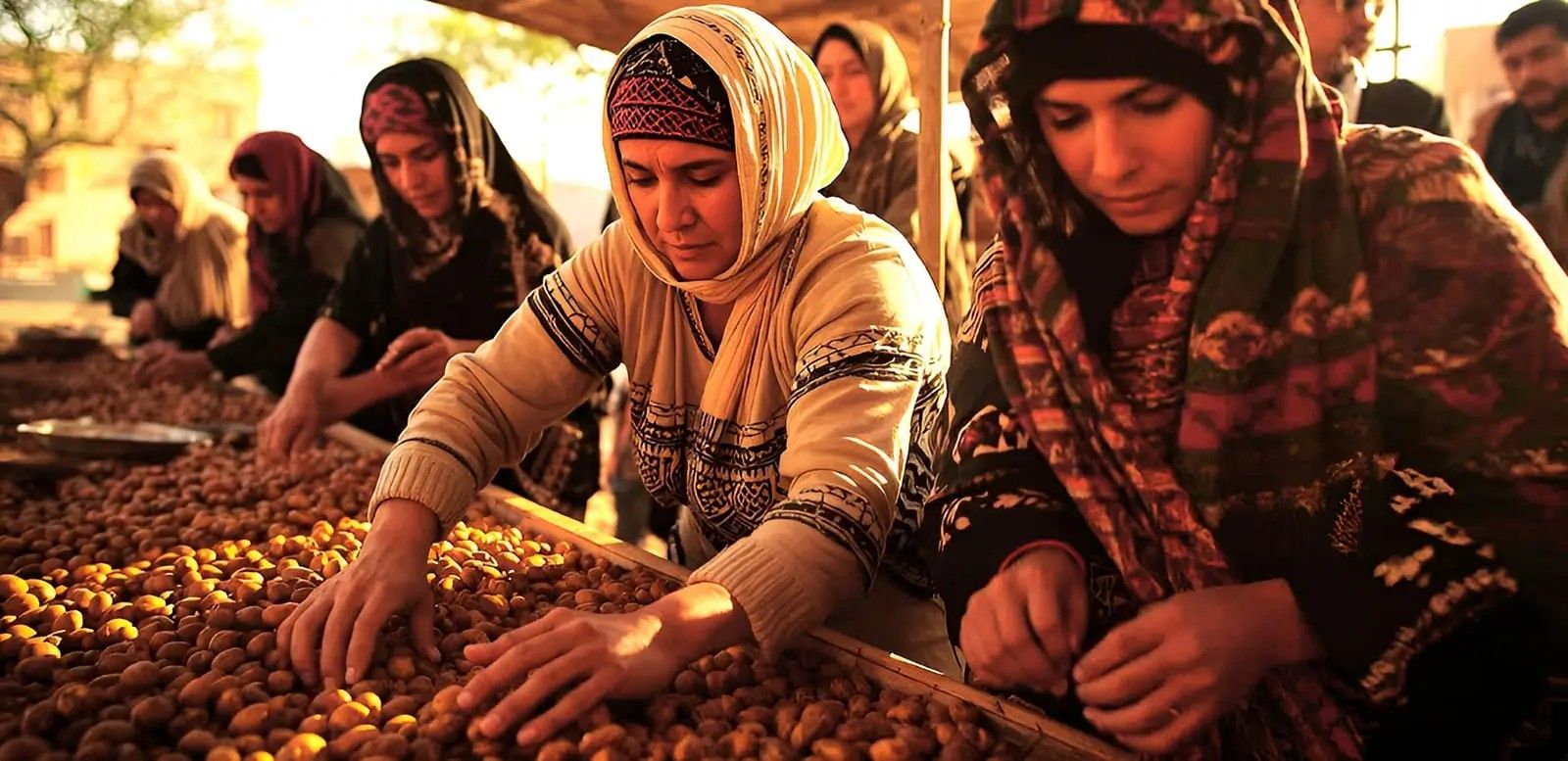
Today many women work together in cooperatives. In a good one, the women own the business, share the profits and set working hours that fit their family life, and they can often come and go as they need. Some are small, with a handful of women. The largest union of argan cooperatives, UCFA, groups 22 of them. I will be honest, though: argan does not make anyone rich. Incomes are often modest, which is exactly why it matters where you buy.
12 benefits and uses of argan oil
I am a guide, not a doctor, so I have separated what is traditional from what has been studied. Where the evidence is thin, I say so.
In the kitchen
1. Dipping oil at breakfast. Culinary argan oil is made from gently roasted kernels, which gives it a deep, nutty taste. Dip fresh bread in it, with or without honey. This is how most Moroccan families know it.
2. Amlou. The famous Moroccan spread: ground almonds, argan oil and honey, blended into a thick paste. Spread it on warm bread or msemen. Most people buy a jar to take home before they leave.
3. A finishing oil. A few drops over couscous, salads, grilled vegetables or a tagine at the end of cooking. Do not fry with it. It can burn, and you would lose the flavor you paid for.
For skin
4. A moisturizer for dry skin. Argan oil is rich in oleic and linoleic acids, roughly 43% and 37%, and it contains vitamin E. A few small studies report better skin moisture and elasticity. It is a gentle, simple option for dry skin.
5. Skin elasticity. Small studies, some in postmenopausal women, suggest improvement when argan oil is used on the skin or eaten. The results are promising but early, and more research is needed. It will not replace sunscreen.
6. Dry or irritated patches. Many people use it on small dry or irritated areas. The evidence is limited, and for eczema, psoriasis or anything persistent, please ask a doctor first.
For hair
7. Frizz and shine. A drop or two on dry ends smooths frizz and adds shine. It can hide split ends, but it does not repair them.
8. Colored or heat-styled hair. One 2013 study found better hair quality in intensely colored hair. Keep it on the ends, and away from an oily scalp, where too much can feed dandruff.
Everyday and traditional uses
9. Hands, cuticles and nails. A drop massaged into dry hands and cuticles is a traditional habit, and it is pleasant after a long day of walking in the medina. I know of no strong studies for nails, so I mention it as a use, not a cure.
10. A heart-friendly food oil, maybe. In one small study of 40 healthy people, about 15 g a day for 30 days lowered LDL cholesterol by 16% and triglycerides by 20%. It was small and short. Read it as interesting, not as treatment.
11. Massage and body oil. A warm, light oil for tired legs and shoulders after a day of travel. This is a use more than a proven benefit, and many travelers enjoy it.
12. Tradition and gifts. UNESCO notes that argan oil is used in cooking, traditional medicine and cosmetics, as a wedding gift and in festive dishes. A bottle bought from the women who made it is one of the best things you can bring home from Morocco.
What argan oil will not do
You will see big promises online. Dermatologists do not recommend it for acne scars or stretch marks, and research on diabetes, wound healing or cancer comes only from animal or laboratory studies, not from people. Argan oil is a lovely natural oil. It is not a medicine.
Culinary and cosmetic: not the same bottle
Buy the right one for the job. Culinary oil comes from roasted kernels, and it smells of toasted nuts. Cosmetic oil is usually made from unroasted kernels and has a much milder scent. Cosmetic products can contain ingredients that are not meant to be eaten, so never put a body product on your salad.
How to buy real argan oil
- Check the label. A pure product lists only argan oil (Argania spinosa kernel oil), with no perfume or filler.
- Choose dark glass. Light and heat spoil the oil.
- Be wary of very cheap bottles. With about 40 kg of fruit per litre, real argan oil cannot be sold for pennies.
- Buy from a women's cooperative when you can, and ask to see the work. You pay a fair price, and the money goes directly to the women.
- Do a patch test on a small area of skin first. If you have a nut allergy, ask your doctor before using it.
Visit a cooperative on your trip
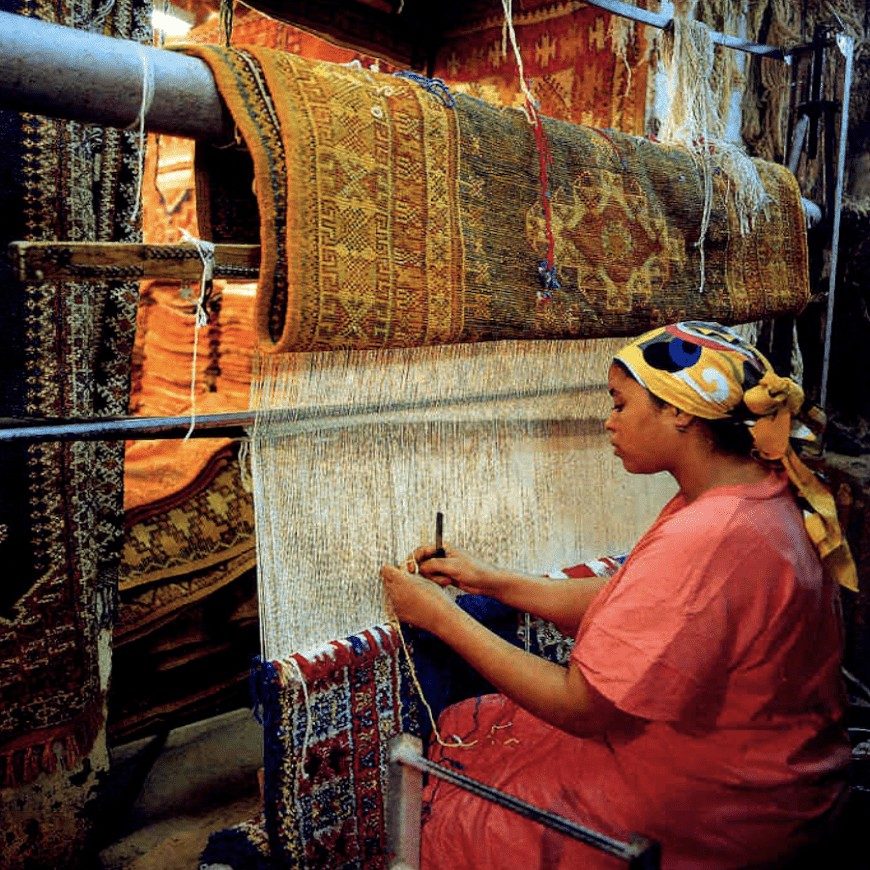
If your route passes through Essaouira, or the coast near Agadir, a visit to a women's argan cooperative is easy to add. You can watch the nuts being cracked, taste amlou, ask questions and buy directly, without pressure. It fits well with the artisan and shopping experiences I arrange, and with any of my private Morocco itineraries. If you are weighing up how long to stay, read how many days you need in Morocco. Women's cooperatives also make some of the best carpets in the country, which I explain in my guide to Moroccan carpets.
Tell me your dates and what you would like to see, and I will build a private journey around it. You can reach me from the contact page.
Sources: UNESCO, Argan, practices and know-how concerning the argan tree; Argan oil (Wikipedia); Healthline; Cleveland Clinic. This article is general information, not medical advice.